High-Altitude Drying: Why Water Damage Repair Works Differently in Colorado
You mop up the water. You aim a box fan at the green spongy carpets. The room still smells damp three days later, and now a dark stain is creeping up the baseboard. What went wrong?
The solution lies in the air around you. Colorado is a mile or more above sea level, and that altitude affects how water leaves the house. Moisture is trapped in your walls because water damage repair here obeys different physics than it does in Houston or Miami. That water trapped is where the real problems originate.
Restoration Logistics in Lafayette is tackling this issue across the Front Range, where thin air and dry winters can trick many homeowners into believing their walls dried quickly when, in reality, they did not. This is the way the mountains play by different rules.
Colorado Air Speeds Up Surface Drying
For example, air in Colorado has less moisture than at sea level. The state typically sees about 30 to 40 percent humidity, often way lower than the sticky 70 to 80 percent so typical in coastal states. Because dry air rapidly suck moisture off surfaces, the top of your carpet or drywall paper face can dry out in hours.
The new speed sounds promising. Sometimes it is. However, the symptoms of surface dryness conceal a more gradual problem lurking beneath the surface.
A crust forms through aerodynamic evaporation of the surface. The external layer dries and closes while water remains confined within the substance’s core. At a half-inch penetration, a moisture meter reads dry at the surface and soaked deeper down. That you cannot feel with your hand.
The Altitude Problem That Most Homeowners Fail to Consider
This is where people mess up. This is why water evaporates faster at altitude due to lower air pressure, and it also affects how air movers and dehumidifiers perform.
That means the air pressure in Denver is about 17 percent lower than at sea level. That thinner air plays a role in three big issues when repairing water damage;
Standard dehumidifiers gradually lose effectiveness because they are designed for sea-level air density.
Air movers force lighter air, so we allow modified placement, and it has to run for less time.
Evaporation rates change, which disturbs drying-time projections developed for reduced elevations
A team working in coastal settings will pick equipment earlier than necessary. The meters look fine. The job looks done. Then the residual moisture remains behind the drywall and goes to work.
Remember last time you detected a soul-dragging musk weeks down the road from an outflow? You know that smell is the indication of something dried on the outside but still wet within.
The Trapped Moisture Effect on Your Home
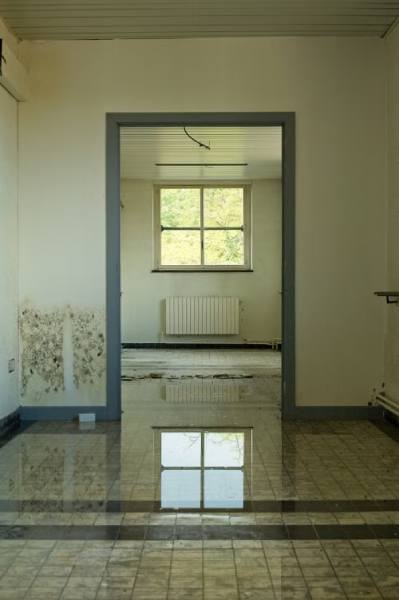
Leave hidden water for a few days, and it will no longer be hydrophobic. Mold spores require moisture, and they locate it rapidly. The Environmental Protection Agency claims growth can begin in 24 to 48 hours, and once it establishes itself inside a wall cavity, it requires demolition rather than drying.
They are, however, far from the only damage that can occur. Here are some things that moisture trapped in your house is still working on your bones:
- Drywall remains soft and begins to droop or crumble.
- Wood framing shrinks, swells, warps, and eventually fails over time.
- Insulation clumps reduce heat retention.
Causes of Indoor Air Pollution in Homes
You paid for the repair. You thought the room was complete. Months later, a contractor opens the wall and discovers rot. That second bill is more painful than the first and should not have happened.
So why are individual proper moisture readings much more important at altitude
A dry surface by itself means nothing. The reading that matters is the one that happens inside the material, and you do this with the right tools in optimal conditions.
Just as good technicians check moisture at multiple depths and in different materials. Each material, wood, drywall, and concrete, retains and releases water at its own speed. A number that indicates dry drywall may still reflect a wet stud on the other side.
Moisture readings, not the surface feeling dry to the touch, indicate when drying is really done. But that difference guards you against the chronic harm that manifests later on. When the air is dry and high in the mountains, it becomes all too tempting to call a job done before it’s completely finished. This desire is exactly what has to be resisted.
Ask yourself this. So would you rather have equipment wait another day or not open a wall next spring to find mold?
The Optimal Way for Implementing High-Altitude Drying
Good Colorado water damage repair simply counts on that thin air from the first hour. The procedure should resemble the following process.
- Defeating full moisture coverage with meters, not gratuitous speculation on where water went
- Air movers and dehumidifiers are set for the local elevation and humidity.
- Daily moisture readings all the way down to the soil’s surface
- Do not remove gear until you verify the structure is dry in the walls and under the floors.
Every step protects against the crust-and-trap effect of low humidity. Miss any of them now, save a day, pay for a reno later.
The season matters too. In Colorado, winter air is incredibly dry, which accelerates surface drying and opens up the gap between what you see and what exists. Although summer monsoon storms nudge humidity higher for short spells, that flips the math again. A team that adjusts to those swings gets your home dry on the first call.
What This Means for Your Next Water Disaster
Water damage happens quickly, and the only clock that matters is the mold clock, not the calendar. Colorado home response to a burst pipe or an overflowing appliance has to be all-out; the wrong effort leaves you worse off than inaction would.
You know how a room never fully dries? You know the sense of gradual despair of a stain that comes back. Donning under the bottom of a mile-high state is what signs look like with a drying sea level.
Since you will need to get everything completely dried out, do this first. Your walls, your floors, and your pocketbook all depend on it.